Skip Links

Main Navigation

KEY FACTS

Some key facts about the transatlantic slave trade

The transatlantic slave trade precipitated many changes across West Africa, Britain and the Caribbean and people’s lives changed irrevocably as a result. The Key facts illustrates the vast numbers of people involved at different points in the history, as well as other key numerical facts. There is a timeline in Learning resources, which details the history starting from AD 700.

300 years

the duration of the transatlantic slave trade

10-12 million

West African people were forcibly displaced from their homes

Acorn
HM Brig ‘Acorn’, 16 guns, in chase of piratical slaver ‘Gabriel’, 1841
Marched to the coast in a coffle
Captured Africans marched to the coast in a coffle
By the 1730s

Britain was the largest European slave-trading nation

From 1690-1807

British ships captured and transported approximately 2.8 million West African people across the Atlantic Ocean

Slave ships

moored for 4-6 months on the West African coast during the second part of the trading journey

The journey from

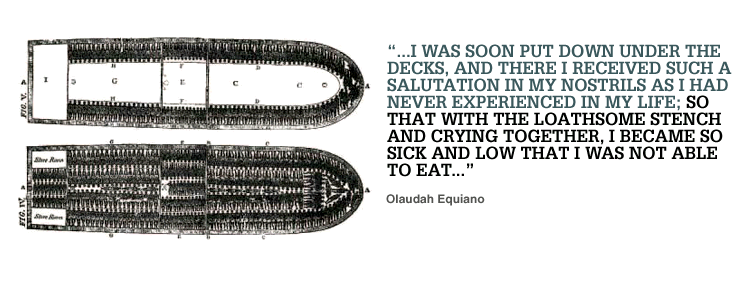
West Africa to the Caribbean - the Middle Passage - sometimes took more than eight weeks

9 inches

is the total amount of width space one man had in a ship's hold: he had to lie on his side with only 2'7" of headroom

1.25 million

West African people died during the Middle Passage

Musket
Musket
A triangular trade vogage

could take a year to complete and, on average, 20% of slave ships’ crew-members died during this period

More than 10 million tons

of sugar cane was exported from the Caribbean during the period of slavery

One third of the people

captured died within the first three years of their life on a plantation

Death of Colston
The death of Colston
On average

there were 200 enslaved men, women and children living on plantations

Tea bowl, saucer and coffee cup
Tea bowl and saucer, and coffee cup, about 1760
By 1791

more than 400,000 Britons were refusing to eat plantation- grown sugar following campaigns by the abolition movement

Cane cutters
Sugar-cane cutters in Jamaica, Caribbean
In 1807

the slave trade was abolished in and to British colonies by an Act of Parliament

1833 Emancipation Act

ended slavery in British colonies. It was abolished in North America at the end of the Civil War in 1865

By 1850

the population of Africa was about 25 million. If slavery had not been instituted, it may have been 46-53 million

Oware board
‘Oware’ board from the Yoruba Nigeria
£20 million

was paid to plantation owners when slavery was abolished in the Caribbean but freed slaves received nothing

Footer Links